If you spend time on Australian building and construction websites, you promptly discover that a lot of serious incidents involve plant and tools. Not since devices are naturally unsafe, yet since individuals and plant are sharing space, commonly under stress, with incomplete information and changing conditions.
The nationwide construction induction, CPCWHS1001 Prepare to function securely in the building market, puts a hefty emphasis on plant and tools risk because of that. Whether you are getting a white card in Adelaide, Darwin, Hobart, Perth, or anywhere else, the core message is the same: if you respect plant, recognize its restrictions, and apply the basics every time, you dramatically lower the odds of any individual obtaining hurt.
This write-up checks out plant and equipment security as it is framed in the Australian white card course, and just how that plays out in actual, high risk jobs on site.
Where plant and equipment suit your white card
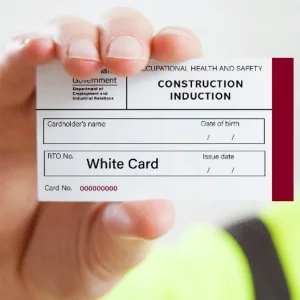
The white card - occasionally called a building induction card or basic building induction training - is a legal need if you are going to get on a construction website in Australia and doing building and construction job. That includes labourers, woodworkers, electrical experts, plumbers, painters, engineers, property surveyors, job supervisors, pupils, and in most cases delivery drivers and realty representatives that frequently go into active sites.
The existing unit of competency is CPCWHS1001 Prepare to work safely in the building industry, although you may still see CPCCWHS1001 referenced in some older materials. The program covers four large themes: recognizing your WHS obligations, identifying dangers, regulating threats, and replying to incidents. Plant and tools safety and security rests inside all four.
In a normal white card course, the fitness instructor will go through:
- what counts as plant and devices on a building and construction site common incident kinds entailing plant - crushing, runovers, complication, drops, electric get in touch with, exposure to dust and noise how to make use of the pecking order of control to handle plant risk, not simply PPE safe work techniques that are non‑negotiable: pre‑start checks, exemption zones, spotters, lockout and tagging, seclusion, and communication
If you approach the program as a box‑ticking exercise, you miss a lot of value. Treated correctly, it is your initial structured take a look at what can fail around mobile and set plant, and how to test unsafe arrangements also as a brand-new worker.
What "plant" actually means on a building and construction site
Many people come into basic building induction training thinking plant just implies an excavator or crane. Under Australian WHS law, plant is a lot more comprehensive. Throughout a white card course Australia vast, instructors will generally specify plant as equipment, equipment, devices, containers, carries out and tools, and also some scaffolds and pressure systems.
On a real website that can consist of:
- earthmoving plant like excavators, skid steers, loaders and graders lifting plant such as mobile cranes, tower cranes, telehandlers, raises, and equipment utilized for dogging and rigging access devices like raising work platforms, scissor lifts and boom lifts powered tools, from demolition saws and nail guns to mills and SDS hammers fixed tools such as concrete batching plant, conveyor systems, and some workshop plant temporary systems consisting of some forms of scaffolding, formwork systems and shoring
Treating every one of that as "plant" assists you use a consistent way of thinking: plant has energy, and uncontrolled power injures people. Mechanical motion, saved hydraulic stress, electric energy, compressed air, also gravity and heat, all need to be managed.
High danger plant tasks that catch people out
In technique, the riskiest plant and equipment scenarios on a building website often tend to look comparable from one state to another, whether you are under the South Australian white card regimen, the New South Wales white card system, or in the Northern Area or Queensland.
A couple of patterns show up repeatedly in event reports.
Working around mobile plant in tight areas is a big one. Pedestrians stroll behind turning around loaders, or throughout a telehandler's path, assuming the driver can see them. On busy websites in Adelaide or Melbourne, when accessibility is limited and multiple subbies are working over the top of each various other, it only takes one unexpected movement for somebody to wind up in a blind spot.
Lifting procedures are an additional. If you have ever before viewed dogging and setting up work carefully, you know just how rapidly a turning lots or stopped working training factor can end up being life threatening. Improperly planned lifts with homemade training gear, no lots graph, and no specified exemption area are still much also common.
Then there is work at elevation utilizing plant. Individuals lean out of scissor lifts, make use of pallets as makeshift job systems on forklifts, or get on top of truck loads without fall defense. A white card course will not certify you for working at elevations, however it should offer you enough awareness to recognise when height job including plant is being done poorly.
Finally, powered hand tools silently contribute to a lot of injuries. One example: a young labourer ordering a 9‑inch grinder with a worn disc and no guard because "we just need a quick cut", and winding up with deep lacerations. The job feels regular, so guards, RCD checks, and housekeeping slip.
The white card course web content tries to give brand-new employees enough functional instances like these to ensure that future warnings stick out instantly.
Controls that matter a lot of around plant
In CPCWHS1001 training, you will certainly hear the term "pecking order of control". It is not just theoretical language for evaluations and white card inquiries. When you take a look at major plant events, you can typically see that controls were chosen from the bottom of the pecking order first, as opposed to the top.
Substitution or engineering controls make the most significant distinction. For instance, making use of a remote‑controlled demolition robotic as opposed to a jackhammer in a restricted room, or setting up physical barriers and gateways around a crane swing distance instead of just asking people to "remain clear". Dividing pedestrians and vehicles with specialized pathways and crossing points is another basic but powerful engineering control.
Administrative controls still matter, especially on fast‑moving commercial work. Safe job method statements, plainly designated watchmans, and easy guidelines such as "no reversing without a watchman in this lane" are instances you will certainly listen to in white card conversations. The trick is that they are just efficient when they are sensible for the task and really enforced.
PPE sits at the bottom of the hierarchy. High‑vis, construction hats, safety boots, eye and hearing defense are necessary on any type of construction website, but they do not in themselves regulate plant dangers. One common error among new to building and construction employees is assuming that due to the fact that they are wearing PPE on a noisy construction website, they are effectively protected from the threat of being hit by a relocating lorry. PPE primarily limits the effects of an occurrence, not the likelihood.
When you rest your white card analysis, some questions will explicitly test your understanding of these levels of control, specifically in plant scenarios.
Pre begin checks and isolation: the boring routines that stop disasters
I have shed count of the variety of plant‑related cases that started with "we missed the pre‑start since we were in a rush" or "we thought it was isolated". The white card course can not teach you to operate an excavator, but it can and should hammer home 2 routines: constantly whitecard perth site induction check, and always isolate.
A convenient pre‑start regimen for plant and tools will check the basics of mechanical problem, security systems, and atmosphere. On a real site that might mean walking a device and looking for leakages, loosened parts, and obvious damages, testing lights, horn and reversing beeper, checking guards and emergency situation quits, and scanning the work area for overhanging powerlines, soft ground, nearby trenches and various other workers.
Here is an easy pre‑start behavior list that lines up with what great white card instructors strengthen:
Walk around the plant and search for damage, leaks, loose parts or missing out on guards. Check security systems - brakes, horn, lights, turning around alarm, emergency situation stops. Confirm workspace problems - ground security, overhanging obstructions, trenches, various other people. Verify approvals and tags - current inspection, logbook entrances, and any isolation or "do not utilize" tags. Test fundamental functions slowly before working at complete rate or near individuals or structures.Lockout, marking and seclusion come into play whenever plant is being repaired, cleansed, or examined, or when there is a well-known mistake. Everybody who holds a building white card should be prepared to deal with a "do not run" tag as absolute. On a decent white card course, you will see actual tags and lockout gadgets, not simply images in a slide pack.
Shared plant: that is actually responsible?
On shared sites - larger commercial builds, industrial jobs, or mining construction - plant and equipment is frequently brought in by specialist subcontractors. A concrete pump, a crane, an EWP hire company. Some employees presume that duty for safety and security sits only with the plant proprietor or operator.
Under Australian WHS laws and the advice in CPCWHS1001 Prepare to work safely in the construction market, that is not exactly how it functions. The major specialist, the host employer, the plant owner, and the workers all share duties. If you are a woodworker, as an example, you may not operate the telehandler that lifts your trusses, yet you have a task not to walk into its dead spots, to adhere to any exclusion zone regulations, and to increase concerns if the lifting configuration looks unsafe.
The white card training is made to give non‑operators just sufficient understanding of plant risks to hold their own in these conversations. That is why you may see inquiries about who can run particular plant, what high threat job permits are required for cranes or dogging and setting up job, and when to quit working and call the supervisor.
Plant and details dangers: dirt, sound, asbestos, silica and heat
Modern building sites include greater than simply physical crush and strike threats around plant. The plant itself frequently creates various other threats that are covered as a whole building induction training.
Dust from building white card perth course and construction sites is a good example. Concrete cutting, chasing, grinding and demolition making use of nuclear power plant create respirable dust, including silica dust. On an asbestos construction website or refurbishment job, even tiny, badly managed tasks can interrupt asbestos‑containing product and placed every person in the area at risk.
A strong white card course will link the dots: it is not enough to put on a P2 respirator. You need to consider exactly how to control dust at the source via damp cutting, on‑tool removal, correct control, and decontamination treatments. That applies in mining white card contexts along with in urban building projects.
Noise from plant is one more slow‑burn threat. Numerous younger employees on labourer white card programs do not feel the pain from sound direct exposure instantly, so they undervalue it. Yet investing hours near jackhammers, concrete pumps, or generators without hearing defense brings about permanent hearing loss. The training course needs to drive home that sound is not simply irritating, it is a health and wellness danger that calls for controls: quieter plant choice where possible, isolation, time limits, and suitable PPE.
Heat stress on building sites, particularly around plant with bad color or in Australian summer seasons, is worthy of more attention than it usually obtains. Operators in enclosed cabins without working air conditioning, or labourers functioning near warm exhausts and engines, are at danger of dehydration and warmth health problem. White card trainers typically use real stories below: automobile operators passing out, or workers making poor choices late in the day because they are overheated.
Electrical security and plant
Plant and electrical power interact in a couple of high risk ways. Mobile plant contacting overhanging powerlines is the traditional instance. A boom lift or crane slewing right into live lines, or a tipper raising a tray under a line, is the type of occurrence that makes nationwide information due to the consequences.
The construction induction card training hangs around on electric security construction essentials for that reason. Safe technique ranges, finding, and the relevance of precise service plans are emphasised. New employees are shown that if plant hits a powerline, the driver ought to usually remain in the cab, warn others to maintain clear, and just leave if there is instant risk such as fire, following stringent jump‑clear techniques.
Portable electrical plant and devices bring various other familiar dangers: harmed leads, missing out on tags, no RCD protection, or people dealing with power tools in wet problems. Numerous white card analysis questions tap into these situations, searching for an understanding that isolation, examination and testing, and RCDs are your front line of defence, not just rubber boots.
High risk plant and work at height
Working at heights and plant are intertwined on most commercial and residential projects. Contractors using EWPs, exterior installers in swing stages, electricians accessing overhanging cable television trays from scissor lifts, or plumbing professionals functioning from boom raises to mount pipework.
In the context of CPCWHS1001, you are not being trained as a heights professional, however you need to come away with a clear picture of what great practice looks like. As an example, using accepted access tools instead of basing on buckets or the top step of a ladder, linking off devices, not climbing on guardrails, and understanding when a harness system is required.
A practical white card course will certainly additionally touch on edge cases: using plant on sloping or soft ground, wind limitations for EWPs and cranes, and the interaction between climate, plant stability and operating at elevations. Heat, rain, and wind all influence whether plant operate at elevation is secure on a given day.
What the white card does and does not certify you for
A lot of complication still surrounds the connection in between the white card and other construction permits in Australia. The white card is your basic induction. It proves you have actually finished CPCWHS1001 Prepare to work securely in the construction market (or an older equivalent) and are permitted to get in functional building and construction websites for work covered by the building construction honor 2020 and associated sectors.

It does not authorise you to run plant that requires a high threat job licence, such as cranes, some EWPs, or dogging and setting up. It also does not in itself certify you for a building and construction instruction, although a lot of building and construction apprenticeship demands will certainly consist of holding an existing white card before you begin on site.
Similarly, expert duties such as web traffic control, asbestos removal, and restricted space entry require additional training. The white card course intends to give you sufficient structure so that when you later attend these courses, the WHS principles are familiar.
How to request a white card with plant safety and security in mind
If you or your group are starting in building and construction, the procedure to make an application for white card training is relatively simple, however varies slightly by state and territory.
Here is a straightforward, sensible sequence that reflects exactly how it operates in a lot of Australia:
Create a USI (One-of-a-kind Student Identifier) online, which you will require for any country wide identified training consisting of CPCWHS1001. Choose a registered training organisation that provides the white card course in your state or area, checking whether training should be in person or can be partially online. Enrol in CPCWHS1001 Prepare to function securely in the construction sector, seeing to it you recognize the course duration, assessment layout, and recognition requirements. Complete the training and analysis, paying certain focus to plant and equipment modules, and proactively asking questions regarding circumstances you expect to face. Receive your declaration of accomplishment and your physical or electronic white card, and learn exactly how to verify your white card and keep records in instance it is shed or damaged.Different jurisdictions have extra policies. For instance, some states restriction or restrict completely on the internet white card training, so the response to "can I do white card online" will depend on where you live. There are likewise regulations around white card NT 60 day credibility for acting cards, and specific needs for white card NSW connecting to one-on-one delivery and NSW white card expiry policies. A good service provider will certainly explain these state differences clearly at enrolment.
white card classes hobartWhite card cost varies by company and area, but for specific bookings it is often in the low thousands of bucks. Team white card training for company clients can be extra economical each, and business white card training can be tailored with examples that match a company's actual plant fleet and job types.
What to anticipate in the training course around plant and equipment
People often ask, "Is the white card course hard?" The brief solution is that if you focus and involve with the product, especially around plant dangers you will in fact see on website, you need to be great. The language is maintained plain, and trainers are made use of to sustaining participants that are new to construction or that have English as a second language.
In relation to plant and tools, anticipate to see realistic pictures and videos of equipment being used, event case studies, and white card course concerns framed around "what would certainly you do?" minutes. White card questions and solutions frequently examine whether you can appropriately determine a threat and recommend a proper initial response, not whether you know rare law numbers.
Practice white card examinations and sample white card examination inquiries and answers PDFs can help you get a feel for the design. Beware, however, of web sites that declare to supply "CPCCWHS1001 white card responses" or "white card examination responses" as a faster way. Memorising those does not assist you on a live site when you are standing alongside a reversing truck or a jammed conveyor. The real worth is being able to see a plant danger and respond sensibly.
The white card course what to expect short from many RTOs is accurate: anticipate around someday of training, some created and spoken analysis, and active participation. For how long does a white card course absorb hours? Usually six to 8 hours including breaks, although some service providers spread it in a different way. Under 18 individuals can go to, yet may need parental permission or supervision relying on regional rules.
Site culture, communication, and your right to talk up
No amount of CPCWHS1001 white card material can replace a strong safety and security society on website. If supervisors or skilled professions minimize plant dangers, disregard exemption zones, or inform brand-new workers not to trouble with watchmans or pre‑start checks, the threat rises no matter how many white cards are in wallets.
This is where WHS interaction on building and construction websites becomes real. As a brand-new or young worker, you ought to really feel able to state "I do not really feel safe standing below while that crane is operating" or "The guard is missing from that mill, we must label it out". The basic building induction training define that you have a right to quit or decline risky work and to raise risks, including plant‑related ones, without being victimised.
Look at construction site indicators as an additional communication device. Indications suggesting exclusion areas, PPE needs, or caution of mobile plant are just effective if individuals respect them, and if they actually mirror conditions on the ground. When signage ends up being outdated, confusing or neglected, it is an indicator that plant security is not being handled well.
Keeping your white card and your plant abilities current
Once you have your Australian white card, does it run out? The card itself does not typically have actually a fixed expiry day in several jurisdictions. Nevertheless, some regulatory authorities deal with white cards as inactive if you have not performed building and construction benefit a specified period, frequently 2 years, and may need re-training or refresher course training prior to you go back to site. This is due to the fact that expertise, specifically around rapidly changing locations like plant security and hazardous substances building, discolors otherwise used.

If you lose your card, get in touch with the RTO or authority that released it to ask for a substitute. White card replacement processes and fees differ by state. For instance, replacement white card WA and white card substitute SA requests are handled with different sites. It is wise to keep a duplicate of your statement of accomplishment, which verifies you completed the CPCWHS1001 program even if the physical card is missing.
Given just how swiftly plant innovation and WHS expectations relocate, some companies run internal white card refresher sessions focused on high risk locations like plant, operate at elevation and construction emergency treatments. These do not typically change the formal white card, yet they assist maintain recognition sharp. Corporate white card and team white card training courses are frequently used to induct entire groups simultaneously, particularly when major projects ramp up.
From an individual advancement angle, if you are thinking of exactly how to become a building contractor in Australia, or intending a long‑term job in building, treat each communication with plant as a knowing possibility. Ask operators inquiries, watch just how knowledgeable riggers handle lots, and pay attention during website toolbox discuss incidents including plant.
Plant and equipment are at the heart of contemporary construction, whether you are on a high‑rise in Sydney, a community in Adelaide, a resource project in the Northern Territory, or a college refurbishment in Tasmania. The white card course is not the end of your knowing. It is the beginning factor that shows you where the edges are, particularly with high threat jobs entailing plant.
If you respect those edges, keep asking "what could fail with this maker below, today, in these conditions?", and utilize the basic controls you learned in CPCWHS1001 every single time, you provide yourself and your officemateses a better possibility of going home intact at the end of each shift.